Wednesday, 14 March 2012

Go MAD Cycling Tour to Gudalur - Day 3

Go MAD Cycling Tour to Gudalur  - near Chikyelchatti
Day 3: March 9th, 50kms
Chamarajanagar to Chikyelchatti 
  
We got some tea by the roadside and started off from Chamarajanagar at dawn. We continued on NH209 up to Terkanambi, where we took a side road towards Bachahalli. Had the usual heavy breakfast, and continued on the road which varied from dirt to partially paved. I managed to keep my road bike out of trouble until we hit a long and steep downhill dull of loose rock, where it was hard to keep the speed under control. Soon I had my first puncture, as expected, and fixed it. I was back on the road in 17 minutes, and caught up with the rest at the next stop. 

There was one scary moment when I was focusing so much on the road surface that I didn't notice an old woman with a bullock on a rope, with the rope pulled tight across the road! At the last minute, she dropped the rope, and I escaped! 

Later the road became completely uneven, full of large stones, and I had my second puncture. Since it was only a few more minutes to Chikyelchatti, I decided to take a ride in the support vehicle. After a minute, I swapped places with Nishita and rode her MTB for the rest of the way. It was my first real off-road ride, and it was scary sometimes on the downhills! That the bike was a few sizes too small did not help either.


Meanwhile a couple of other bikes too had punctures, so we all had to wait for them to get ready.


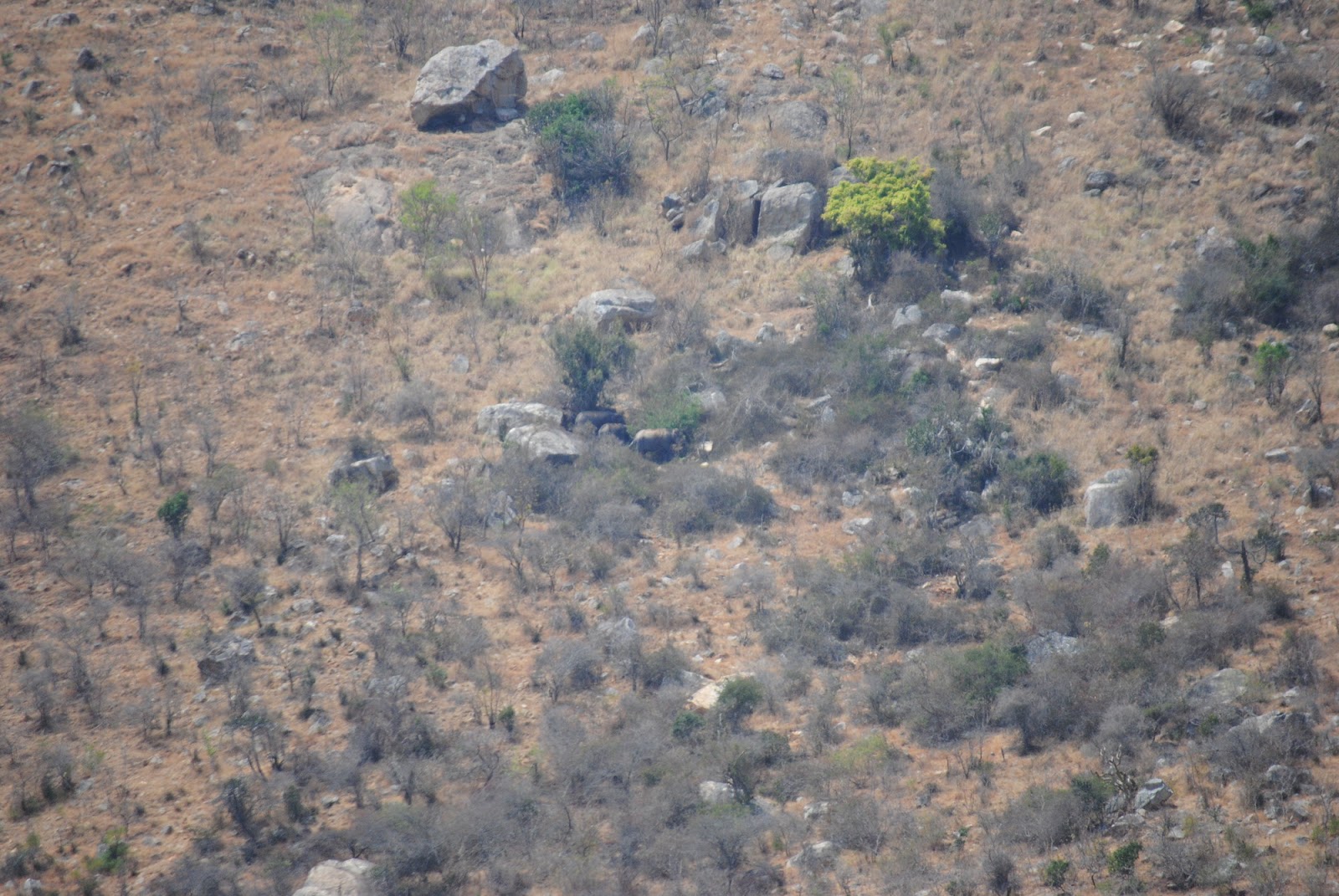
Meanwhile some forest guards showed us a couple of wild elephants up on the hill, and we all tried to take pictures and to show others where they were!

Can you spot the elephants?

Finally we rode downhill to Subbanna's heritage home at Chikyelchatti. I took a small tumble at one place, but it was at a very slow speed, so no damage was done.
We were going to stay at Subbanna's house whose family is supposed to be there for over 300 years, at Chikailchatti, just outside Bandipura. An NGO called Junglescapes is helping poor farmers like Subbanna to conserve the forest ecology in a sustainable way. There is a huge tree in front of the house which is more than 100 year old.


There was also a little water in the stream, where we could see lots of birds, including the Paradise Flycatcher. We also found a dead bird, which turned out to be a juvenile woodpecker.


The Green Hotel folks cooked us lunch, and went back to Mysore. We all really appreciated their cooking, and thanked them.

Meanwhile, many of us helped to move an old cart which was lying in the front of the house, to a place at the back. We didn't realize how heavy it was, and it took all the strength of about 15 of us to move it.

In the evening we went for a drive through Bandipura, and spotted grey mongoose, peacocks, jungle fowl, wild boar, and lots of deer.


On the way back, we heard that a large tusker and a gaur were sighted in Chikyelchatti, so we had to be very careful.


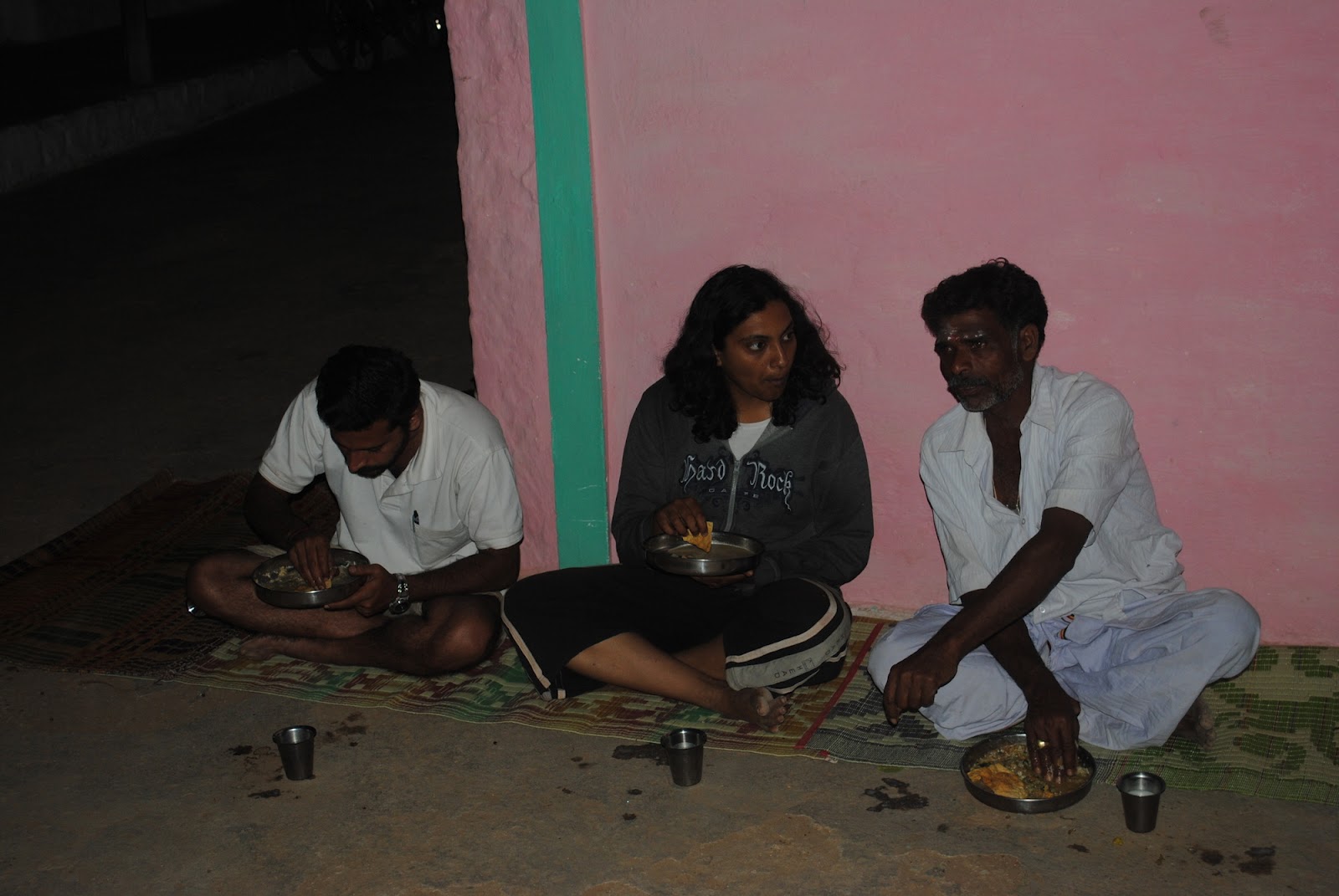
Madhu, Nishita and our host, Subbanna
Later we had a moonlit traditional dinner with Ragi Mudda, chapatis, and majjige made by the hosts. It was the first time I had ragi mudde, and it took some time to figure out how to eat it.


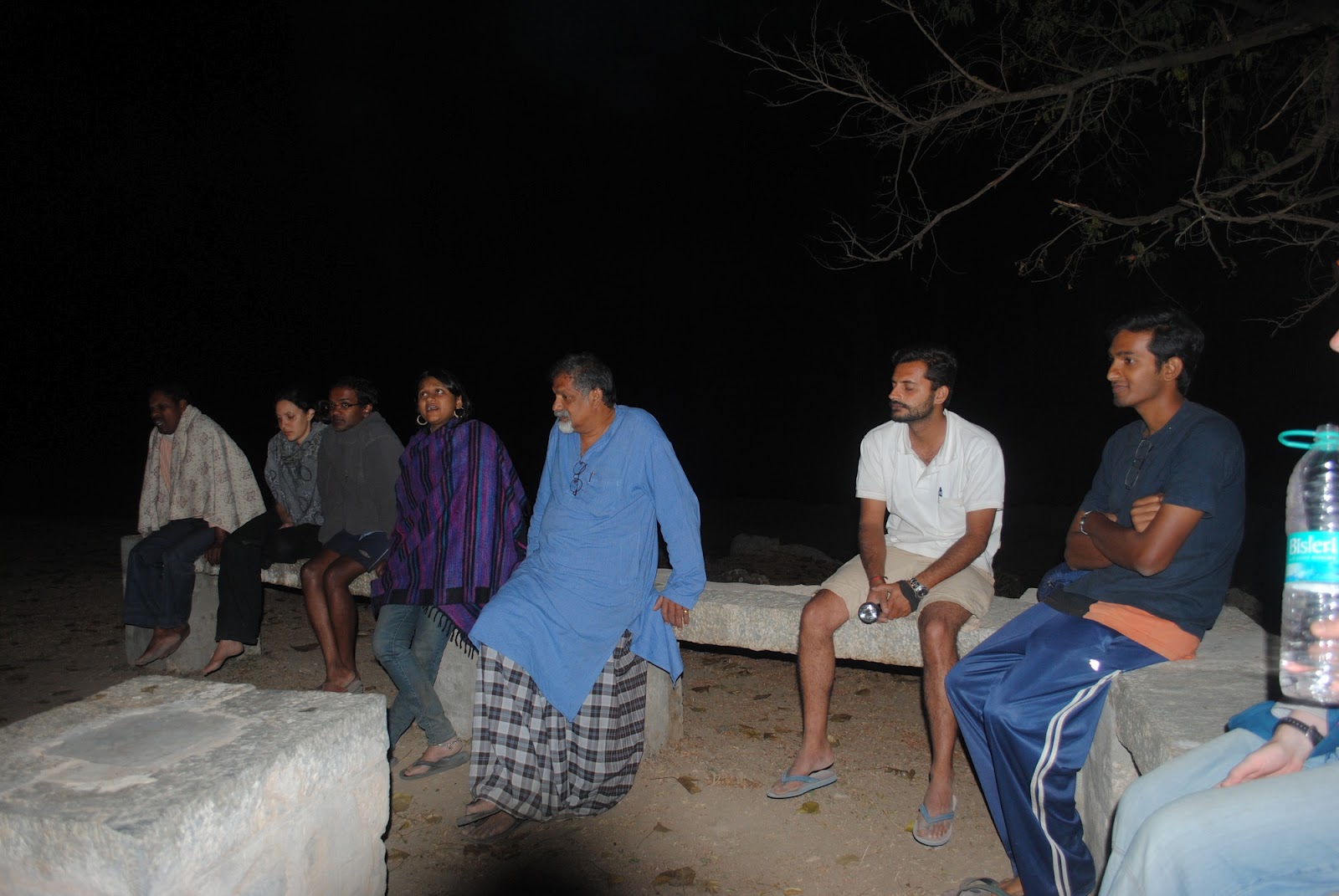
Then we pitched the tents, and spent some time at the campfire.
Stan getting ready to entertain us at the camp fire

Priya, who joined us at Bandipura in the evening, sang some songs, and Stan entertained us with his inimitable skills. Unfortunately many of the folks had already gone to bed in the house. The rest of us slept comfortably in the tents. Now that we were in the foothills, it got quite cool at night.


Read More

Day 3, Chamarajanagar to Chikyelchatti


Non-Profit Organizations working at Gudalur

VIDYODAYA

The Vidyodaya school currently caters to about 100 children in Gudalur, which is a small town. They have an option now to build a school much closer to some of the villages, which would make it possible to reach many more children. The funds we are raising go towards purchase of the land for the new school. 

OTHER ORGANIZATIONS

It was quite inspiring to see all the people who are working on various issues at Gudalur. These are some of the non-profit organizations, all working together in the Gudalur area. I did not have enough time to really understand a lot about each of them during my short time at Gudalur.

ACCORD - the umbrella organization at Gudalur, working on Adivasi issues.
AMS (adivasi munnetra sangham) - the main organization of the adivasis themselves, which runs most of the organizations.
Ashwini - runs the hospital at Gudalur.
Just Change - produces tea, spices, soap, etc. and sells them direct to consumers such as fisherfolk at Nagapattinam. Also provides support and training for similar community initiatives.
Shola Trust - works on environmental issues in Nilgiris, including wildlife.
Go MAD  - Go Make a Difference, set up to organize the cycle ride.

Learn more about all these at http://www.adivasi.net

Photos
More photos can be seen on Picasa . There are 5 albums, arranged by day.


Go MAD Cycling Tour to Gudalur - Day 2


Go MAD Cycling Tour to Gudalur - just after crossing the Kaveri river

Day 2, March 8th, 80kms
Malavalli to Chamarajanagar

We got up early as usual, packed our stuff, and got on our bicycles at dawn. The support staff managed to get us coffee and tea, so we didn't have to make a stop for that. 
Overnight, Dr Mahesh (an Ayurvedic doctor who divides his time between Gudalur and Bangalore) joined us on his bike, so we now had additional support.

He biked up and down, between the front and tail support vehicles, and kept the riders supplied with fluids and energy. He even got us fresh sugarcane juice from the roadside jaggery units!

As we were very close to the Kaveri river, there were lots of water bodies on the road side, and we found lots of birds.

Painted Storks


Heritage home (built in 1923)
After the hot afternoon experience of Day 1, we decided to try and finish most of the riding before lunch, so we rode over 30 kms before breakfast, which was again very filling and tasty. We had a long way to go before hitting Chamarajanagar, so we had lot of breaks, including one at this beautiful old building.


We found someone was staying  there, and even got invited to see inside. It was a traditional house with a nice courtyard and a lovely wooden ceiling. It would make a nice eco-resort one day.

We had a late lunch in a field, just short of our destination, and took rest for a while. Dr Mahesh provided some massage to some of the riders. 

Meanwhile some of the others were busy fixing punctures. I, Nikhil, Naveen and Stephen were generally kept busy during the breaks with punctures and minor repairs.
We rode the remaining distance to Chamarajanagar, where we were staying at KNN Lodge. 

All along the  route, it was heartening to see that bicycles are very much a part of rural life. People use them for personal transportation as well as to carry all kind of goods.

Non-recreational use of bicycles


RLHP, Mysore (Rural Literacy and Health Programme)
rlhpmysore.org

After freshening up, we went to visit a  slum improvement project about one km away. The organization RLHP is working on preventing child marriages here as well as education and health.
Stan doing his magic show
I showed the kids and others how to make Newspaper Hats, with the help of the other GoMAD riders, and the kids really enjoyed it. Stan then entertained them with some magic, and the kids performed a skit on child marriage. 
Later we had a simple moonlit dinner prepared by them, and went to sleep at the lodge.


Read More

Day 2, Malavalli to Chamarajanagar


Non-Profit Organizations working at Gudalur

VIDYODAYA

The Vidyodaya school currently caters to about 100 children in Gudalur, which is a small town. They have an option now to build a school much closer to some of the villages, which would make it possible to reach many more children. The funds we are raising go towards purchase of the land for the new school. 

OTHER ORGANIZATIONS

It was quite inspiring to see all the people who are working on various issues at Gudalur. These are some of the non-profit organizations, all working together in the Gudalur area. I did not have enough time to really understand a lot about each of them during my short time at Gudalur.

ACCORD - the umbrella organization at Gudalur, working on Adivasi issues.
AMS (adivasi munnetra sangham) - the main organization of the adivasis themselves, which runs most of the organizations.
Ashwini - runs the hospital at Gudalur.
Just Change - produces tea, spices, soap, etc. and sells them direct to consumers such as fisherfolk at Nagapattinam. Also provides support and training for similar community initiatives.
Shola Trust - works on environmental issues in Nilgiris, including wildlife.
Go MAD  - Go Make a Difference, set up to organize the cycle ride.

Learn more about all these at http://www.adivasi.net

Photos
More photos can be seen on Picasa . There are 5 albums, arranged by day.

Tuesday, 13 March 2012

Go MAD Cycling Tour to Gudalur - Day 1


The GoMAD cycle tour from Bangalore to Gudalur, March 2012
The Go MAD (Make A Difference) cycling tour to Gudalur is a charity ride to raise funds for the Vidyodaya school in Gudalur. The idea is that each rider would raise at least Rs. 25,000 from their family and friends. The other aim of the ride is to provide a connection between the people in the urban areas (such as the riders) and the rural communities. This is done by visiting the communities on the route, interacting with them, eating and staying with them where possible.


Overview

14 of us rode from Bangalore to Gudalur, about 250 kms over 4 days, along with 7-8 support staff, interacting with different communities on the way. Gudalur is on the route from Mysore to Ooty. We cycled through Bandipur and Mudumalai National Parks; both are Tiger Reserves as well, but we didn't see any tigers, which is probably good news if you are on a bicycle! 

A typical day started with a 5:30am alarm to get ready for the day. We start riding at 6:30am, and ride for about 25-30kms, stop for breakfast around 9am, and then ride some more, until we stop for lunch around 1pm.

We had a special food crew (from Green Hotel, Mysore) who went ahead and set up the food for us. The food was one of the highlights of the trip! We had two support vehicles, one at the front and one at the back, with a motorcycle going up and down, and providing riders with water, fruits, etc.


It was quite nice to see Stan and Mari (founders of ACCORD) in the lead vehicle, full of energy, helping the riders right through the 4 days. Overall, it was a nice and fun ride, and I got to see and learn a lot during the ride.

Special thanks go to Nishita, for organizing the ride, all the support staff who kept us supplied with food and drinks (Madhu, Sophie, Joby, Stan, Mari and the Green Hotel staff).


About the Go MAD ride

When I first read about it in January, I signed up immediately, as the idea of a long ride combined with interaction with the communities on the way appealed to me. I then forgot about it, as I got busy with my Origami exhibition at Japan Habba on Feb 19th. And the day after the exhibition got over, on 20th Feb, I got a call from Nishita, which set the ball rolling again. I could not do any practice riding for some time, as I had some severe allergy symptoms, but finally on Sunday, March 4th, I rode on Magadi Road up to Thippegondanahalli (35 kms each way), which made me feel that I could do the 250 kms over 3 days.

I then took my trusted Bianchi to Pedals and Wheels, and had Sachin give it a good overhaul. It was good to see the bike working so beautifully even after 14 years.


Day 0, March 6th
Fireflies Ashram, Kanakapura Road. Bangalore

Fireflies Ashram on Kanakapura road was the starting point for the ride, and we were supposed to gather here on the 6th evening. Fireflies is an eco-friendly "resort" which is a center of a lot of activities, including an annual music festival. I and my wife drove there, and found the place after getting lost a bit. She dropped me and left on the long drive back home. 
All the riders and support staff arrived over the evening, and we reassembled all the bicycles which came by the pickup truck from Bangalore. We had a briefing, and also got our GoMAD t-shirts.  There were going to be 14 riders in all, and I was the only one who knew nothing about ACCORD and had to connection with Gudalur! The riders included 5 young adivasis from Gudalur, a couple from UK who are volunteering at Gudalur, a couple of others from Bangalore and the rest who are working at Gudalur. There was a fairly large support staff as well, including a doctor from UK.
And I was the most experienced rider of the lot, which was new to me! We had dinner and went to bed, full of anticipation of the adventure to come.


Day 1, March 7th, 80kms
Fireflies to Malavalli


We left Fireflies Ashram just after dawn, after tea and fruits. We stopped to see the brilliant reflection of the sun in one of the many lakes by Kanakapura road.

The cool morning breeze made it quiet pleasant to ride. We saw some painted storks up on a tree right on the highway.

We stopped after riding for about 30 kms for a humongous breakfast of upma, omelettes, bread/butter/jam, fruits and coffee/tea. 


After that we went past Kanakapura, and stopped for lunch before noon, near Sathanur. We had a long break and ate the fresh lunch prepared by the staff of Green Hotel, Mysore who accompanied us for most of the trip. We usually stopped at a farm and ate sitting under the shade of coconut trees.


We still had about 15 kms left before we reached Malavalli, so we left at 3:30pm after a short nap. It was really hot riding in the afternoon, so we kept stopping to refill our water bottles from the support vehicle  manned by Madhu and Sophie. Sophie is a doctor from UK, and is volunteering at the ASHWINI hospital at Gudalur.


We finally reached the village of Anchedoddi, just before Malavalli.

We immediately set off to see a Jaggery making unit and silk worm production in the village.


We were going to stay at the village marriage hall, next to the temple. After the village visit, most of had a bath outdoors and relaxed, waiting for dinner. The farmers' movement (KRRS) representatives arrived late, disrupting all the plans, but it was interesting to listen to the history of KRRS, and their problems. Stan Thekaekara, the founder of ACCORD, was a good friend of Prof. Nanjundaswamy, who founded KRRS in 1980.

After the late dinner, we tried to sleep inside the marriage hall, but it was too hot, and the mosquitoes were too many. I followed Stan to sleep outside, and then we figured out that we could go to the rooftop. So finally we went up and slept in the cool breeze there. Even here, I needed some mosquito repellent to get a few hours of sleep.

Jaggery Making
The sugarcane is crushed to release the juice, which is then boiled in huge open containers.The crushed sugarcane is itself used as the fuel, which is neat!


They keep throwing some soda into the boiling juice to make the fibre and impurities come to the top, which is then removed. After about two hours, the thick mush is poured into long wooden moulds.


Once the jaggery solidifies, the moulds are turned upside down, and bludgeoned, releasing the jaggery.

The freshly made, golden jaggery was lovely to look at. These jaggery cubes are packed in bunches of 50, using the sugarcane leaves, and apparently sell for about Rs 300 (7-8 kilos).


Silk Production

Nowadays farmers buy the "seeds" - which are bunches of silkworm eggs laid on paper, from the Govt. sericulture department. These are then fed tons of chopped mulberry leaves, and when the worms are ready, they are transferred to the "chandrika", which is a tray with circular slots for the worms to make the cocoons.


The cocoons are sold by farmers in auctions, and are boiled to kill the worm and to release the silk thread, which is spun into yarn.

The whole process is very labour intensive, which makes it very relevant to our villages. Silk production is means of livelihood for a large number of people in Karnataka.


KRRS - Karnataka Rajya Raitha Sangha

I had always associated the KRRS with protests, usually stopping traffic in the city! KRRS members usually wear a distinctive green cloth over their shoulder. The movement apparently started in 1980 when the government allowed banks to take away farmer's assets if they defaulted on their loans, Over the years, it has become one of the largest farmers' organizations, and has links with similar movements in other countries.

One of the issues that came across is that cities are attracting the youth away from farming, so it is difficult to get any labour for farming. The KRRS rep mentioned how he saw many vehicles which were dropping workers off after work, driving them about 50 kms to and from their homes, to work in garment factories.

Meeting with KRRS representatives


Read More

Day 1, Fireflies to Malavalli


Non-Profit Organizations working at Gudalur

VIDYODAYA

The Vidyodaya school currently caters to about 100 children in Gudalur, which is a small town. They have an option now to build a school much closer to some of the villages, which would make it possible to reach many more children. The funds we are raising go towards purchase of the land for the new school. 

OTHER ORGANIZATIONS

It was quite inspiring to see all the people who are working on various issues at Gudalur. These are some of the non-profit organizations, all working together in the Gudalur area. I did not have enough time to really understand a lot about each of them during my short time at Gudalur.

ACCORD - the umbrella organization at Gudalur, working on Adivasi issues.
AMS (adivasi munnetra sangham) - the main organization of the adivasis themselves, which runs most of the organizations.
Ashwini - runs the hospital at Gudalur.
Just Change - produces tea, spices, soap, etc. and sells them direct to consumers such as fisherfolk at Nagapattinam. Also provides support and training for similar community initiatives.
Shola Trust - works on environmental issues in Nilgiris, including wildlife.
Go MAD  - Go Make a Difference, set up to organize the cycle ride.

Learn more about all these at http://www.adivasi.net

Photos
More photos can be seen on Picasa . There are 5 albums, arranged by day.

Monday, 5 March 2012

Bookshelf and Bicyling


Bookshelf and Books


Design from the book "Origami Omnibus" by Kunihiko Kasahara (available on Flipkart)

Paper: 60cm x 60cm square of recycled paper.
Final size: 10.5 cm x 21cm
Complexity: Difficult

It is a bit like a Masu box with dividers, but the design is quite ingenious. The paperback books are made with paper one quarter the size of the shelf.


Snapology Icosahedron


Design by Heinz Strobl
Paper:  30 strips 1:6 for the triangles, 20 strips 1:4 for locking, of copy paper.
Video instructions here.

An Icosahedron is a regular polygon with 20 triangular faces.This model is actually an icosahedron with the triangles projecting out perpendicularly.

Snapology is the term coined for folding Origami using long paper strips.

I made this with the paper left over after cutting squares out of a lot of colour copy paper! The overall design is just like that of a kusudama, so you will have 12 stars such as the yellow one you see in the picture here.


Away to Gudalur  on my bicycle

I have not been doing much Origami during the last couple of days, as I am preparing for my long ride to Gudalur with Go! MAD Cycle Tours.  So I am going to post a couple of models from the archives this time. I hope to be back next week with some new models.


A simple version of Fireworks

A pile of "fireworks", made from long strips of paper/board.  The design is fairly simple, simply interleaving the two strips, forming a paper spring. The two ends are then locked together, forming a tight circle. If the strips are not long enough, you have to join multiple strips.

These are also called Flexagons, as they can be "flexed". These fireworks can be turned inside out continuously, and they are fun to play with because jump a bit when you flex them.


Spring Into Action

Design by Jeff Beynon.
From one A4 sheet of copy paper.

The model can be made completely flat, or stretched, just like a paper spring. The design is very simple, but involves tedious folding of lots of diagonals across a narrow rectangular grid.